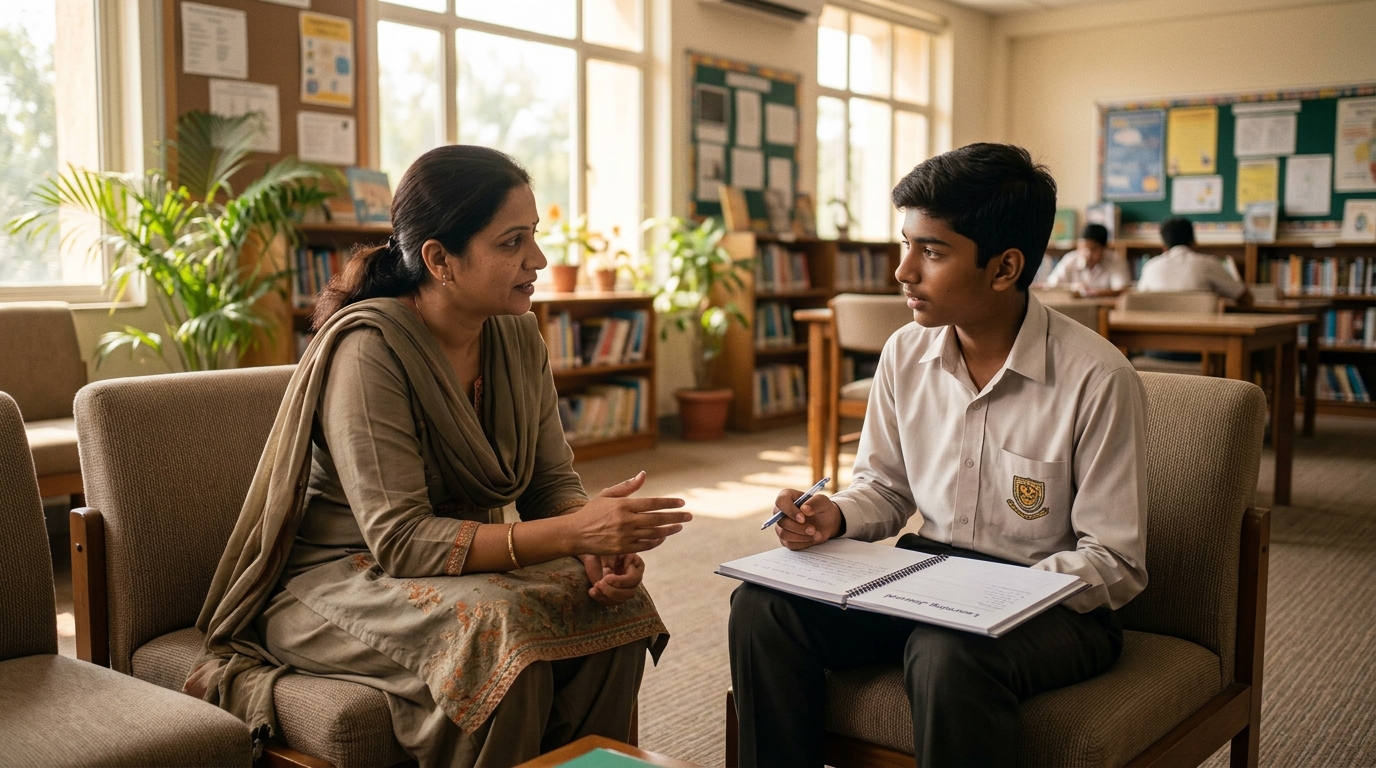
Career Guidance
Help students explore their future before decisions become urgent. Creates a structured space for students to understand interests, recognise strengths and explore educational possibilities within the developmental years.
Begin with Self-Understanding
Activities help students describe what they enjoy, what they find challenging and where they show sustained interest.
Subject preferences, practical tasks and everyday observations contribute to the discussion. A student's current marks are useful context, but they are not the whole picture.
Explore a Wider World of Possibilities
Career awareness introduces different areas of work and the abilities they involve. Discussions can connect interests with people, ideas, technology, creativity, enterprise or service. Students learn that a career choice involves the nature of the work as well as its title.

An Age-Appropriate Journey
Guidance should respond to student readiness rather than force an early commitment.
Curiosity & Discovery
Encourages broad curiosity and self-discovery. Students observe what activities engage them and learn what different careers actually entail day-to-day.
Skills & Strengths
Focuses on recognising developing skills and useful habits. Connecting emerging interests with constructive effort and teamwork tasks.
Goals & Expression
Deepens goal setting, communication and exploration. Asking constructive questions about educational requirements and career fields.
Stream & Pathways
Brings stream options and future educational pathways into a focused, calm conversation with parents to relieve eleventh-hour panic.
Assessments as Conversation Tools
Aptitude and interest assessments identify areas to explore further. Results are explained by an appropriate professional and considered alongside student reflection, learning experiences and parent observations. A single score is never treated as a final career decision.
Personalised Guidance and Parent Participation
Counselling discussions help students compare possibilities, express concerns and identify missing information. Parents understand the reasons behind preferences, reducing comparison pressure.