
Personality Development Program
Build confidence through practice that fits your life. Gives individual learners a guided way to develop communication, self-awareness and everyday life skills outside a school partnership.
Start with Your Own Growth Goal
Students may want to introduce themselves comfortably, participate in discussions, manage their time or respond better to feedback.
A starting conversation and relevant assessment activities help identify what to work on first. The learning plan reflects the student's needs rather than a comparison with another child or sibling.
Speak, Listen and Express
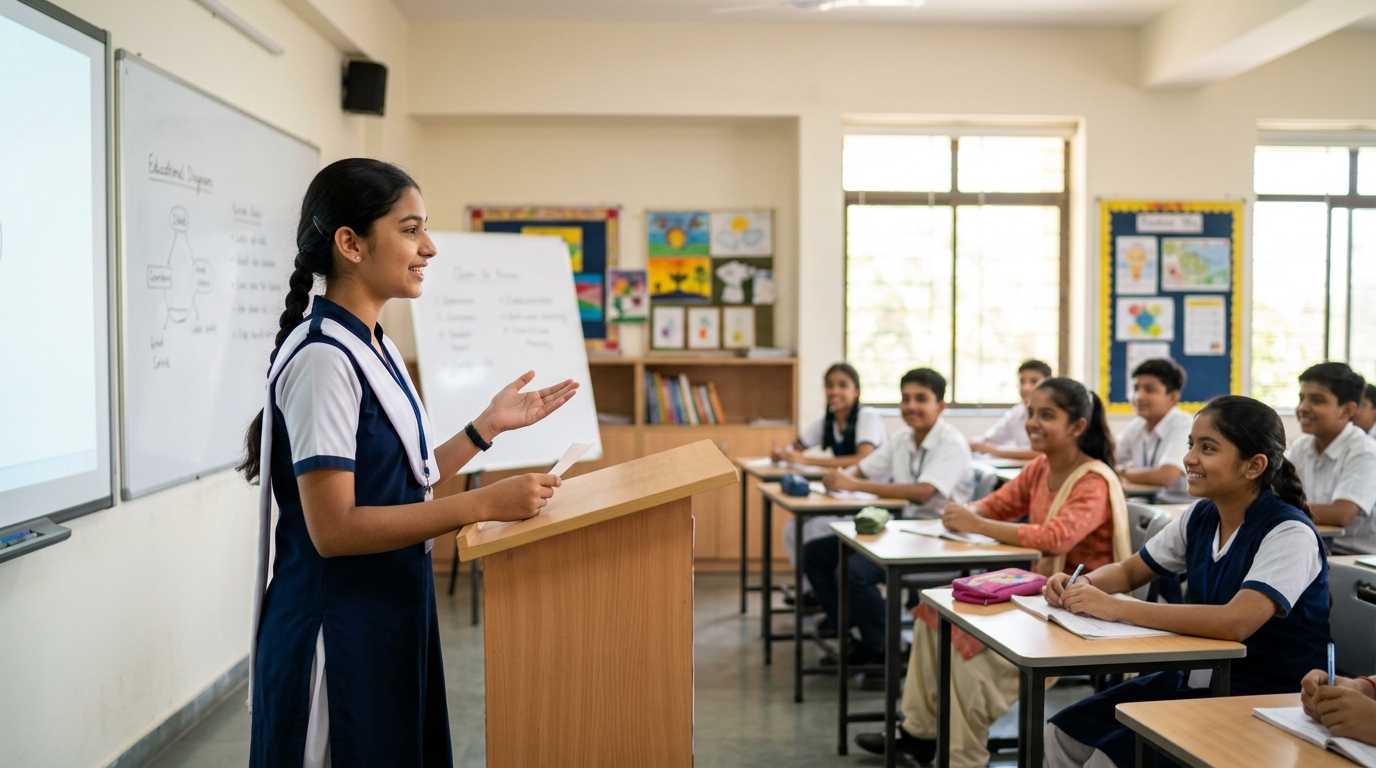
Short speeches, storytelling, group discussion and extempore practice help students organise and communicate ideas. Feedback covers clarity, pace, body language and listening. Students build participation gradually, with encouragement to try again after an imperfect attempt.
Emotions and Relationships
Reflection and realistic scenarios help learners notice emotional triggers, practise empathy and communicate respectfully. Topics include peer pressure, disagreement, asking for help and parent-child communication.
Build Habits with Small Actions
Goal setting, planning and attention exercises support self-discipline. Home missions may involve preparing a short talk, reviewing screen habits or following a study routine that a student can repeat without excessive pressure.
Learn Actively Online
Live sessions invite participation through discussion, role-play and practice. Between sessions, journals or task sheets maintain continuity. Individual support addresses difficulties not easily discussed in groups.